

Ora Iso Team Wins 2nd Place in PIMPI IPB 2026 Scientific Writing Competition with AI- and IoT-Based Agricultural Innovation
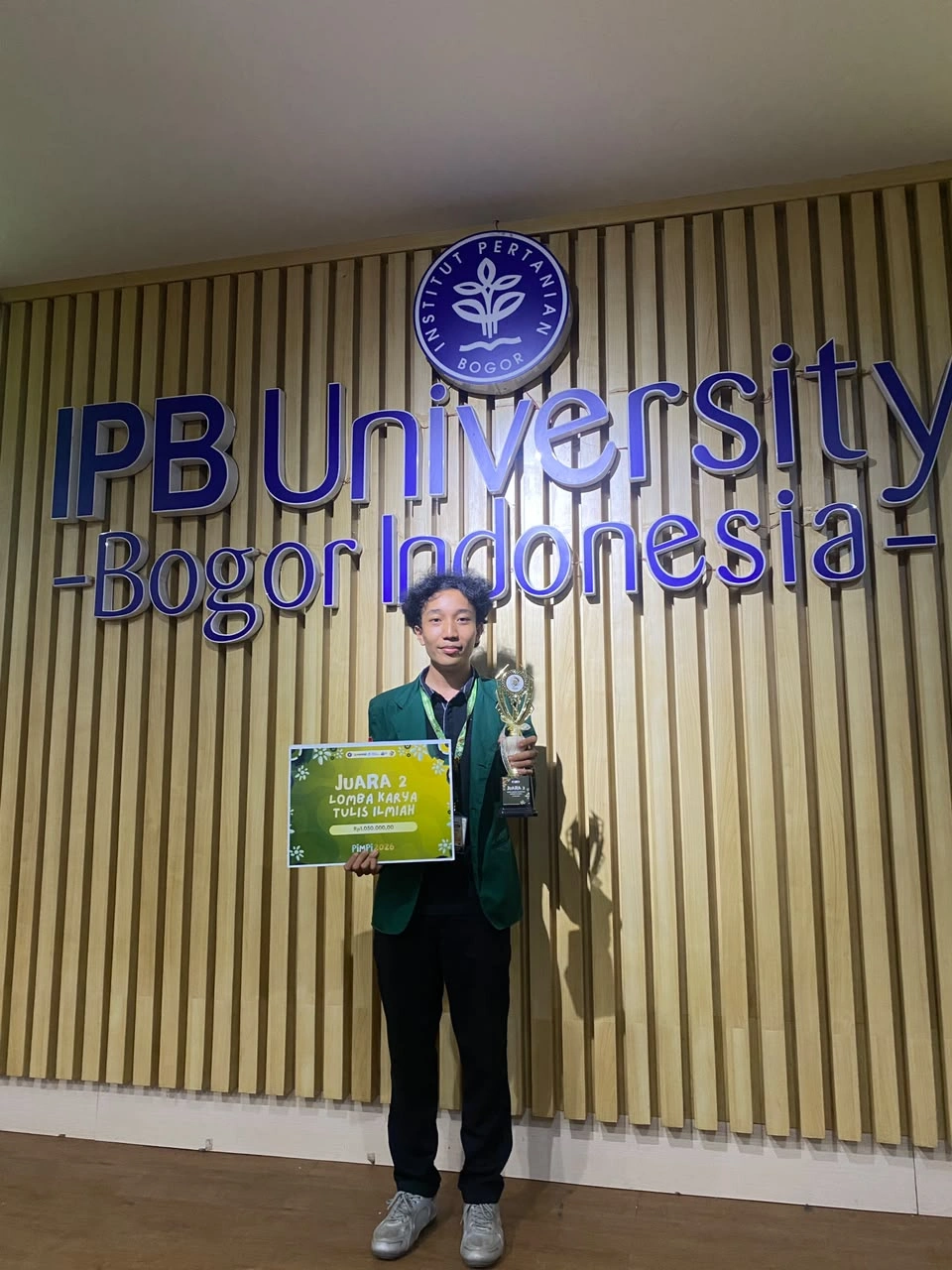


Ora Iso Team Wins 2nd Place in PIMPI IPB 2026 Scientific Writing Competition with AI- and IoT-Based Agricultural Innovation
Published by
Raisha Andini
Published at
Tuesday, 08 September 2026


Through SIP-PETANI 5.0, the team seeks to introduce an agricultural system that integrates technology from upstream to downstream. The system consists of AgroSense as an IoT-based field sensor, AgriTrack for recording farming activities and harvest yields, and TaniTalk AI Chatbot, which is connected through WhatsApp.
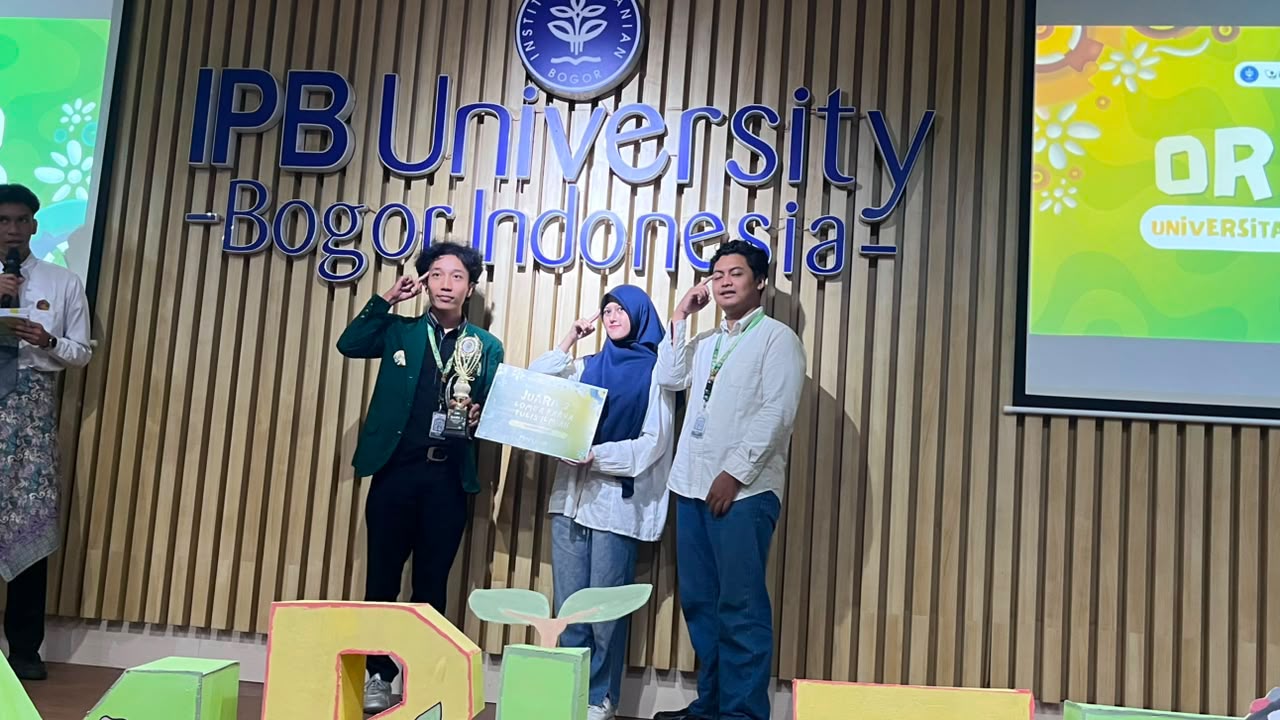
Bogor, USU PUBLIC RELATIONS – Students of Universitas Sumatera Utara (USU) once again achieved an outstanding accomplishment at the 2026 Indonesian Agricultural Student Innovation Week (PIMPI IPB 2026). The Ora Iso Team, comprising students from different faculties, won 2nd Place in the Scientific Writing Competition (LKTI) with an innovative agricultural concept based on Artificial Intelligence (AI) and the Internet of Things (IoT).
The Ora Iso Team consists of M. Ghozi Muzakki from the Food Technology Study Program, Faculty of Agriculture (FP), Aisyah Tsani from the Chemistry Study Program, Faculty of Mathematics and Natural Sciences (FMIPA), and Ronny from the Faculty of Public Health (FKM), who serves as the team leader. In developing their work, the team was supervised by Dr. Erna Mutiara, M.Kes.
The team developed SIP-PETANI 5.0, an agricultural system that integrates technology to help farmers address climate change while improving the efficiency of land management. The innovation was developed in response to challenges still faced by smallholder farmers, particularly their limited access to and adoption of digital technologies that can support agricultural activities.
Bringing Technology Closer to Farmers
According to M. Ghozi Muzakki, one of the issues that attracted the team’s attention was the limited use of digital technology among smallholder farmers. This situation has become increasingly complex due to climate change, which has resulted in unpredictable weather, drought, and pest threats that can affect agricultural productivity.
Through SIP-PETANI 5.0, the team seeks to introduce an agricultural system that integrates technology from upstream to downstream. The system consists of AgroSense as an IoT-based field sensor, AgriTrack for recording farming activities and harvest yields, and TaniTalk AI Chatbot, which is connected through WhatsApp.
AgroSense is designed to monitor soil and weather conditions in real time, allowing irrigation and fertilization to be carried out based on actual field conditions. Meanwhile, TaniTalk helps farmers obtain information and early warnings regarding weather conditions and crop-related problems. Farmers can also send photos of plant leaves to receive guidance on crop conditions. Data on farming activities and harvest yields can then be recorded through AgriTrack.
Ghozi explained that the integration of these technologies is designed to transform farming practices from being reactive to becoming more preventive. By monitoring field conditions and providing early warnings, farmers can take action before risks such as drought, pest attacks, and crop failure become more severe.
“This innovation changes farming practices from being reactive to preventive. Amid the threat of El Niño or extreme drought, the system provides early warnings. Its precision irrigation system can save up to 30 percent of water, prevent root rot, and reduce the risk of crop failure. Therefore, this is a tangible step toward environmentally friendly Climate-Smart Agriculture,” said Ghozi.
Echoing this view, Aisyah Tsani explained that SIP-PETANI 5.0 was designed to help farmers adapt to climate change through the use of integrated technology. In addition to improving water-use efficiency and monitoring field conditions, the system enables farmers to receive information more quickly when facing extreme weather or pest threats.
Cross-Disciplinary Collaboration
Differences in academic backgrounds did not become an obstacle for the Ora Iso Team in developing its concept. Instead, the diversity of disciplines allowed each member to contribute a different perspective to the development of SIP-PETANI 5.0.
Ghozi focuses on agronomic aspects, water-use efficiency, and commodity quality from upstream to downstream. Aisyah focuses on soil chemistry, technical methodologies, IoT sensors, and the analysis of fertilization and irrigation. Ronny develops the social and economic aspects of farmers, community empowerment, policy, and SDG-based sustainability.
The process was not always easy. Differences in perspectives across disciplines at times required lengthy discussions to reach common ground. However, these differences ultimately helped the team develop a more comprehensive understanding of agricultural challenges.
Going Beyond an Idea
The Ora Iso Team hopes that SIP-PETANI 5.0 will not remain merely a scientific work developed for a competition, but can be further developed and implemented in communities. One of the team’s development plans is to adopt a communal ownership model through farmer groups or Village Unit Cooperatives (KUD), so that the use of the technology does not become a burden for individual farmers.
The team also identified several aspects that still need to be developed, including expanding the AI system’s support for regional languages, strengthening sensors to withstand extreme weather conditions, developing market price prediction features, and sourcing locally produced components to make the technology more affordable for smallholder farmers.
Ghozi hopes that the innovation will provide broader benefits to society, particularly farmers. According to him, the success of an innovation should not be measured solely by the sophistication of the technology it employs, but also by the extent to which the idea can be implemented and deliver tangible impact.
“A good idea is not simply the most sophisticated innovation, but an idea that can ‘live’ and create a broad impact on the welfare of our farmers,” said Ghozi.
The Ora Iso Team’s achievement as 2nd Place in the PIMPI IPB 2026 Scientific Writing Competition demonstrates how collaboration among students from diverse academic disciplines can generate ideas that respond to real-world challenges. This accomplishment is expected to encourage USU students to continue developing innovations that are not only competitive in scientific forums but also capable of delivering meaningful benefits to society.


