

USU Conducts Technical Training for Recognition of Prior Learning (RPL) Assessors


USU Conducts Technical Training for Recognition of Prior Learning (RPL) Assessors
Published by
Raisha Andini
Published at
Tuesday, 21 July 2026


Rekognisi Pembelajaran Lampau (RPL) merupakan bentuk pengakuan terhadap pengetahuan dan keterampilan yang telah dimiliki seseorang sebelumnya. Kemampuan tersebut dapat diperoleh melalui pendidikan formal, pelatihan, kursus, kegiatan pembelajaran lainnya, maupun pengalaman kerja. RPL hadir untuk membuka kesempatan yang lebih luas bagi masyarakat agar tetap dapat melanjutkan pendidikan tinggi meskipun sebelumnya terkendala pekerjaan, waktu, biaya, atau kondisi lainnya.
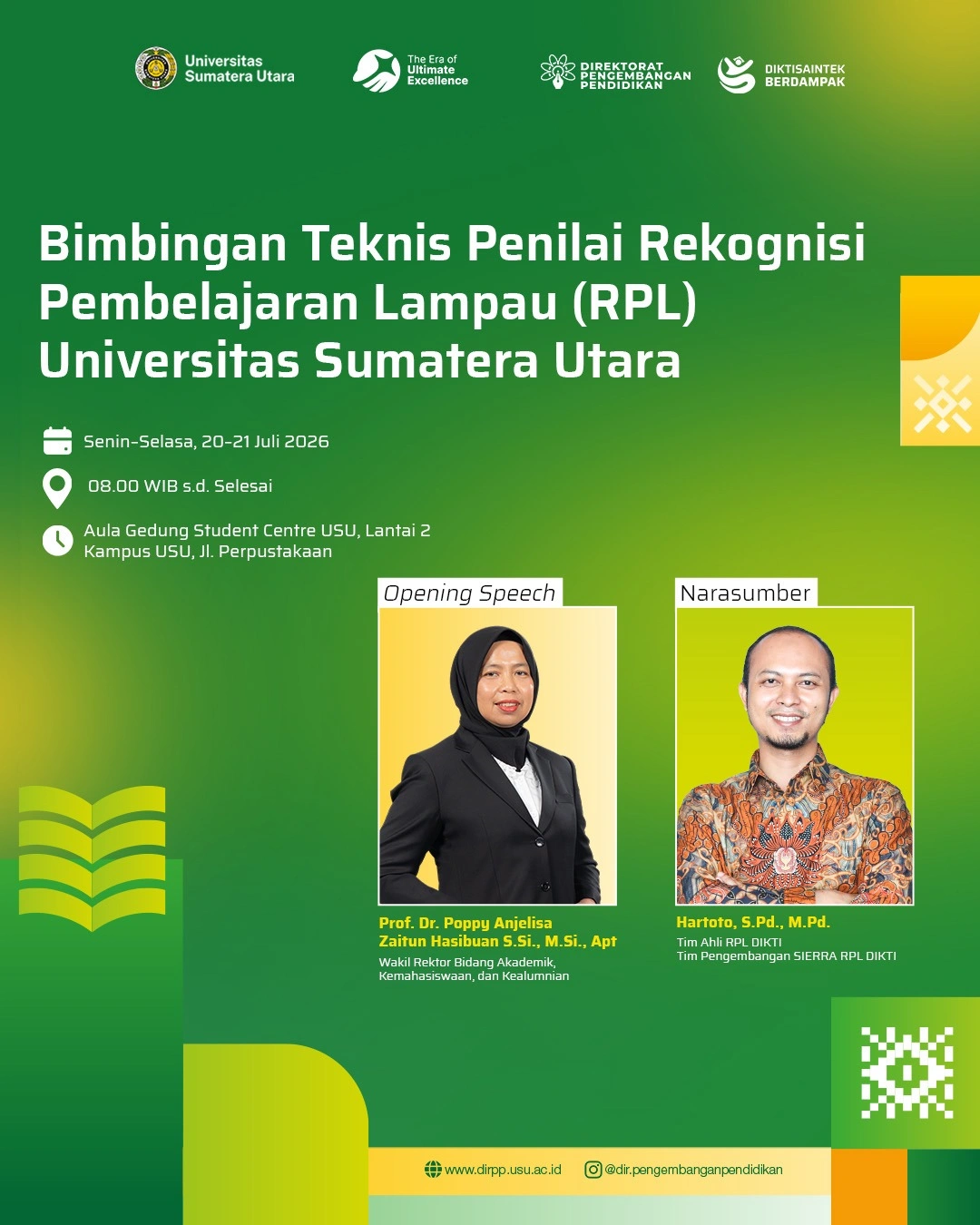
MEDAN – Universitas Sumatera Utara (USU) conducted a Technical Training Program for Recognition of Prior Learning (RPL) Assessors on Monday and Tuesday (20–21 July 2026). Held at the Second Floor Hall of the USU Student Centre, the program was part of the university's efforts to strengthen understanding and enhance readiness for implementing the Recognition of Prior Learning (RPL) system across the institution.
The event was officially opened by the Director of the Directorate of Educational Development at USU, Prof. Dr. Rudi Hartono, S.Hut., M.Si. Through this training, participants gained a comprehensive understanding of the policies, assessment processes, and key regulations governing the implementation of the Recognition of Prior Learning.
Recognition of Prior Learning (RPL) is a formal mechanism for recognizing an individual's existing knowledge and competencies acquired through formal education, training, professional courses, other learning activities, or work experience. The RPL scheme aims to broaden access to higher education by enabling individuals who have previously faced barriers such as employment commitments, time constraints, financial limitations, or other circumstances to continue their studies.
The training featured Hartoto, S.Pd., M.Pd., a member of the Directorate General of Higher Education (DIKTI) RPL Expert Team and the SIERRA RPL DIKTI Development Team, as the keynote speaker. He explained the regulatory framework governing RPL, including its categories, learning achievement recognition process, assessment mechanisms, and reporting procedures.
"Recognition of Prior Learning is the formal acknowledgment of an individual's learning achievements acquired through formal, non-formal, informal education, or work experience," he explained.
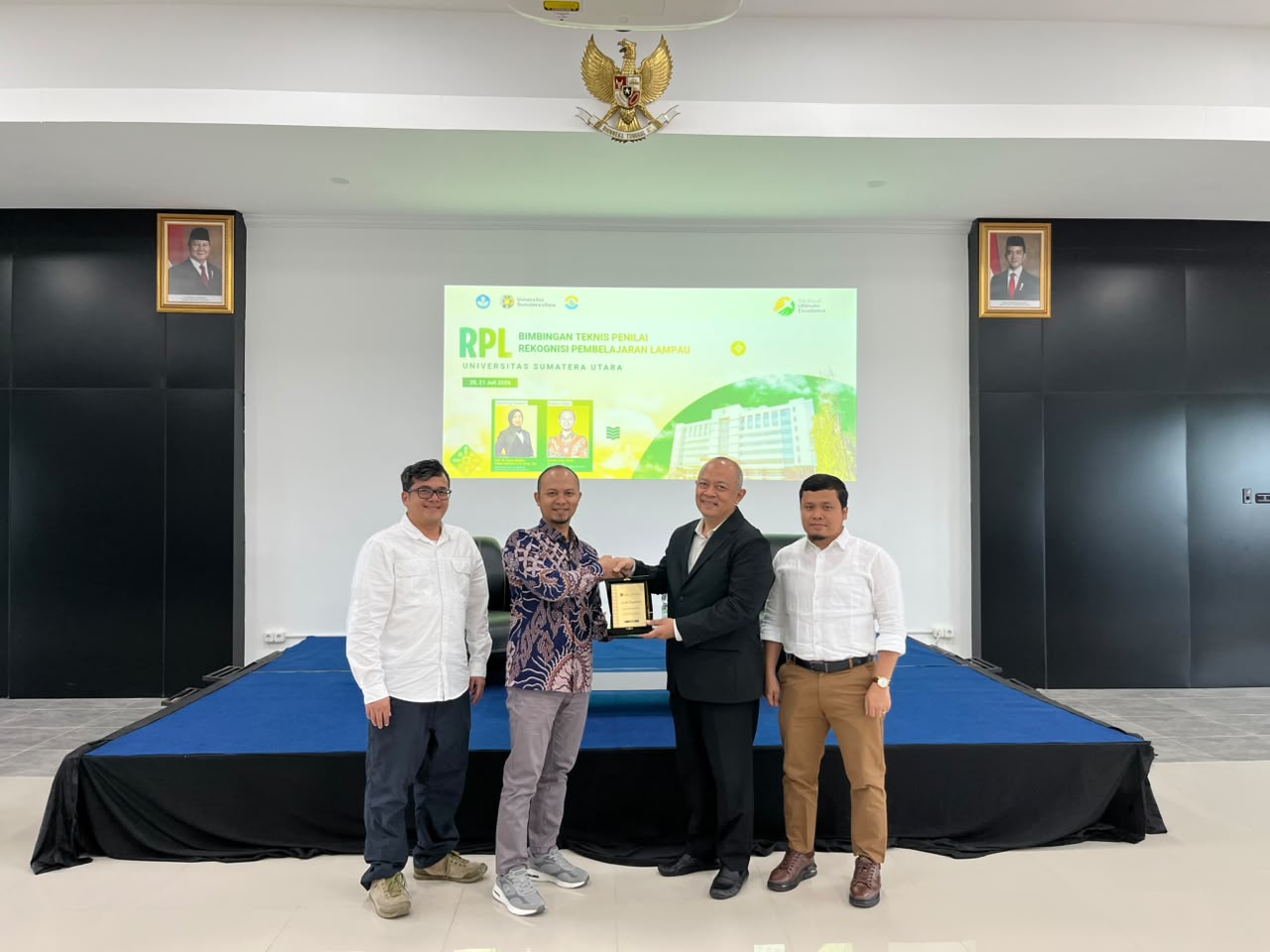
He further outlined that RPL is categorized into Type A and Type B. Type A RPL facilitates entry into formal education through credit transfer or credit acquisition, while Type B RPL is intended for professional qualification recognition, including practitioners seeking eligibility to serve as university lecturers.
"The maximum number of credits that can be recognized through RPL is 70 percent of the total credits required by a study program. However, undergraduate theses, master's theses, and other final projects are not eligible for recognition," he stated.
Students admitted through the RPL pathway are subject to the same academic regulations as regular students. They follow the same curriculum, attend the same classes, and receive the same degree upon graduation. The only distinction is that certain courses or academic credits may be recognized based on an assessment of the student's prior knowledge, competencies, and learning experiences.
The maximum transferable credits remain 70 percent of the total credits required by the study program. Students are still required to complete courses that have not been recognized, while theses, dissertations, and other final academic projects cannot be credited through the RPL process. Assessments may be conducted through document verification, portfolio evaluation, interviews, written examinations, or practical assessments, and must be carried out objectively, transparently, fairly, and accountably.
USU is committed to ensuring that the implementation of Recognition of Prior Learning complies with national regulations while maintaining the quality of higher education. All RPL processes must be properly documented and reported through the Recognition of Prior Learning Information System (SIERRA) and the Higher Education Database (PDDIKTI). The university emphasized that RPL is not a shortcut to obtaining a degree, but rather an official mechanism for recognizing the knowledge, skills, and learning experiences that individuals have acquired throughout their educational and professional journeys.


