

USU Rector: Academic Degrees and Skills Equip Graduates for the World of Work


USU Rector: Academic Degrees and Skills Equip Graduates for the World of Work
Published by
Raisha Andini
Published at
Wednesday, 26 August 2026


“Degrees have not lost their relevance. The meaning of a degree changes as the world of work continues to evolve. A degree is no longer a sign that someone has finished learning. It is proof that a person has acquired the foundation to continue learning,” the Rector said.
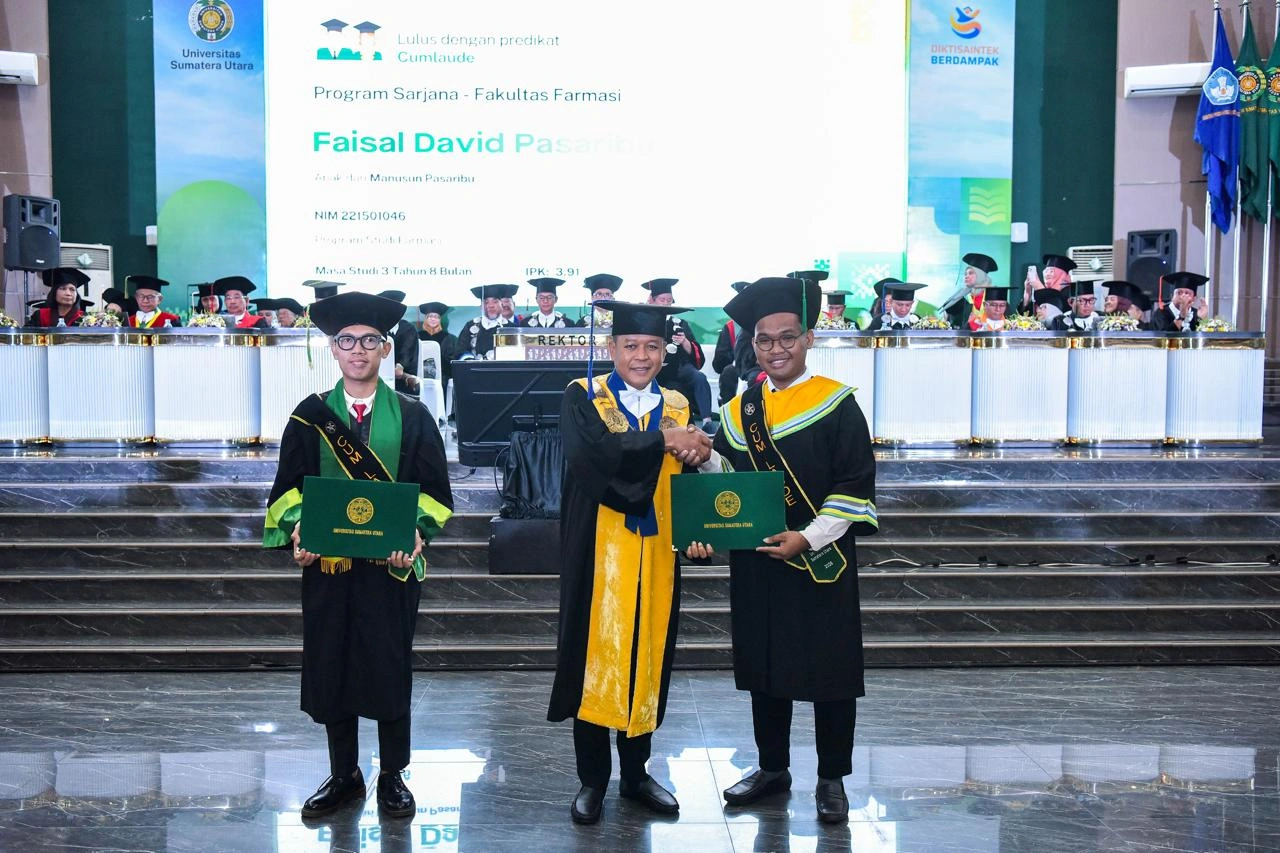
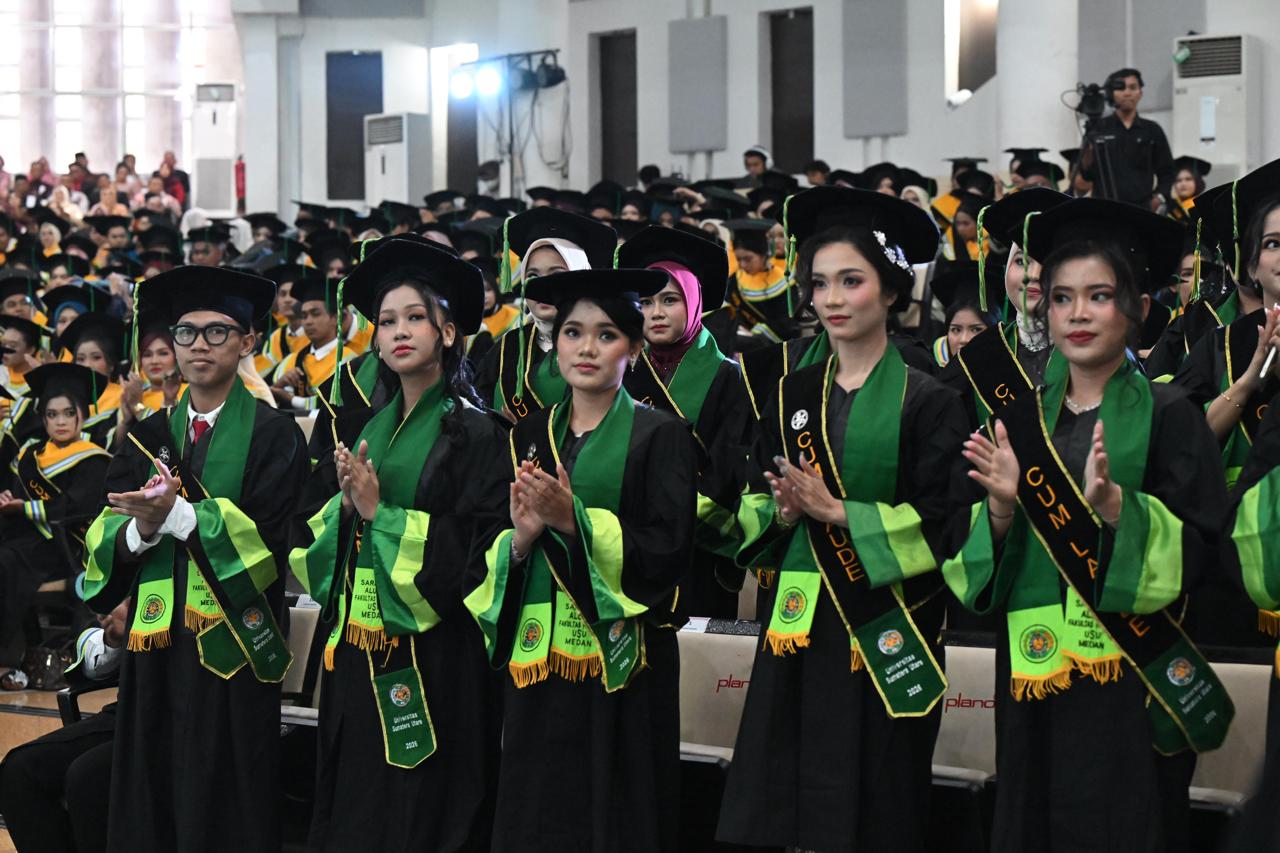
HUMAS USU — The Rector of Universitas Sumatera Utara (USU), Prof. Dr. Muryanto Amin, S.Sos., M.Si., officially conferred degrees upon 5,263 graduates during the Fourth Graduation Ceremony of the 2025/2026 Academic Year, held at the USU Auditorium from Saturday, August 22, to Friday, August 28, 2026.
In his address, the Rector emphasized the importance of balancing academic degrees and skills as essential preparation for graduates entering a rapidly changing world of work.
Under the theme “The Relevance of Higher Education Graduates: Degree vs. Skills?”, the Rector explained that academic degrees and skills should not be seen as opposing concepts.
“A diploma serves as evidence that someone has completed a structured educational process and met academic standards, while skills demonstrate the ability to apply knowledge to solve various problems,” he said on Wednesday (August 26, 2026).
The World of Work Increasingly Emphasizes Competence
Changing workforce demands show that companies are increasingly considering candidates’ practical abilities. Experience, portfolios, technological proficiency, work outcomes, and track records have become important elements in the recruitment process. This reflects a shift from credential-based hiring, which focuses on academic qualifications, toward skills-based hiring, which places greater emphasis on competence.
Nevertheless, this development does not diminish the relevance of academic degrees. Higher education continues to provide the academic foundation necessary for entering the professional world. The challenge lies in how graduates continue learning and developing their competencies after completing their formal education.
“Degrees have not lost their relevance. The meaning of a degree changes as the world of work continues to evolve. A degree is no longer a sign that someone has finished learning. It is proof that a person has acquired the foundation to continue learning,” the Rector said.
Experience as a Space for Developing Competence
The USU Rector encouraged graduates not to stop at mastering theoretical knowledge but to be able to translate that knowledge into practical problem-solving abilities. Graduates also need to build portfolios as evidence of their competencies, continuously update their skills, and strengthen their character and professional reputation.
“The experiences gained during higher education can become valuable assets when entering the world of work. Various academic and non-academic activities can serve as opportunities to develop abilities, broaden experience, and produce work that demonstrates one’s competencies in tangible ways,” the Rector stated.
Contribution as a Measure of Graduates’ Impact
Furthermore, the Rector emphasized that a graduate’s presence should not be defined solely by the academic degree they hold, but also by the contributions they make to society.
“A degree may tell people about your educational background. However, your contribution allows people to experience the benefits of your presence,” he remarked.
According to the Rector, an academic degree provides an educational identity, while skills provide the ability to work and adapt. Both must be strengthened by character, integrity, and a willingness to continue learning so that graduates can make meaningful contributions in both professional settings and society.
The graduates officially conferred their degrees consisted of:
- Doctoral Programs: 78 graduates
- Master’s Programs: 579 graduates
- Specialist Education Programs: 94 graduates
- Subspecialist Education Programs: 3 graduates
- Master’s-Level Medical Programs: 75 graduates
- Professional Education Programs: 256 graduates
- Bachelor’s Programs: 3,439 graduates
- Diploma Programs: 739 graduates
To date, Universitas Sumatera Utara has produced a total of 282,395 graduates.


